 Skip to content
 Russ upgrades to a 10 W head, moving from a single diode to a multi-diode optical system. That immediately raises new questions about how the beams are combined and how the final lens is being used.
Previous: Session 13 | Series Menu | Next: Session 15
What You’ll Learn
- Why a 10 W multi-diode head is optically different from a 5 W single-diode module.
- How lens orientation changes the practical focus and damage pattern.
- Why manufacturer focus gauges may not identify the most useful processing point.
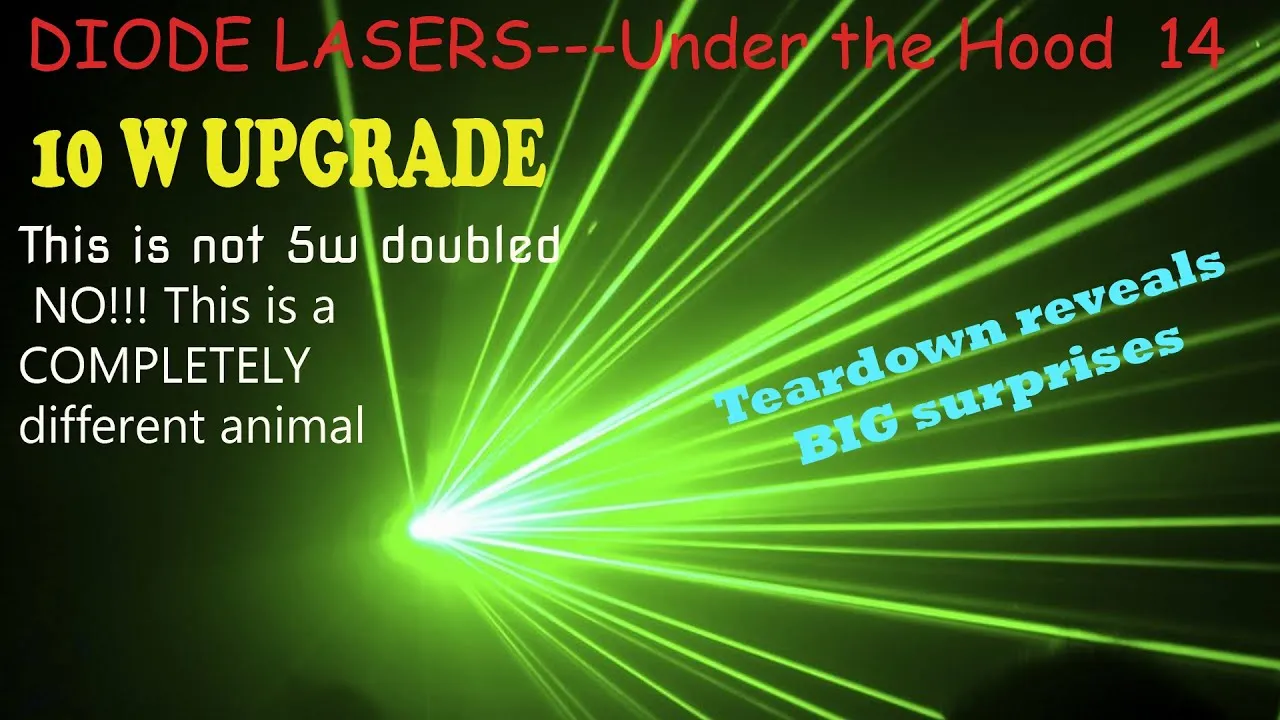
Two Diodes Change the Optical Problem
Adding a second diode is not simply the same beam with twice the power. The internal optics have to combine separate emitters, and the resulting beam can have a different shape and focus behaviour.
Turning the Lens Around
Russ experiments with lens orientation and compares the resulting burn patterns, concentrating on where useful cutting intensity is produced rather than assuming the conventional orientation must be optimal.
Why This Session Matters
The move to 10 W marks a shift from a relatively simple single-diode beam to a more complex combined optical system.
This page is a concise overview of the original video rather than a full transcript.
