 Skip to content
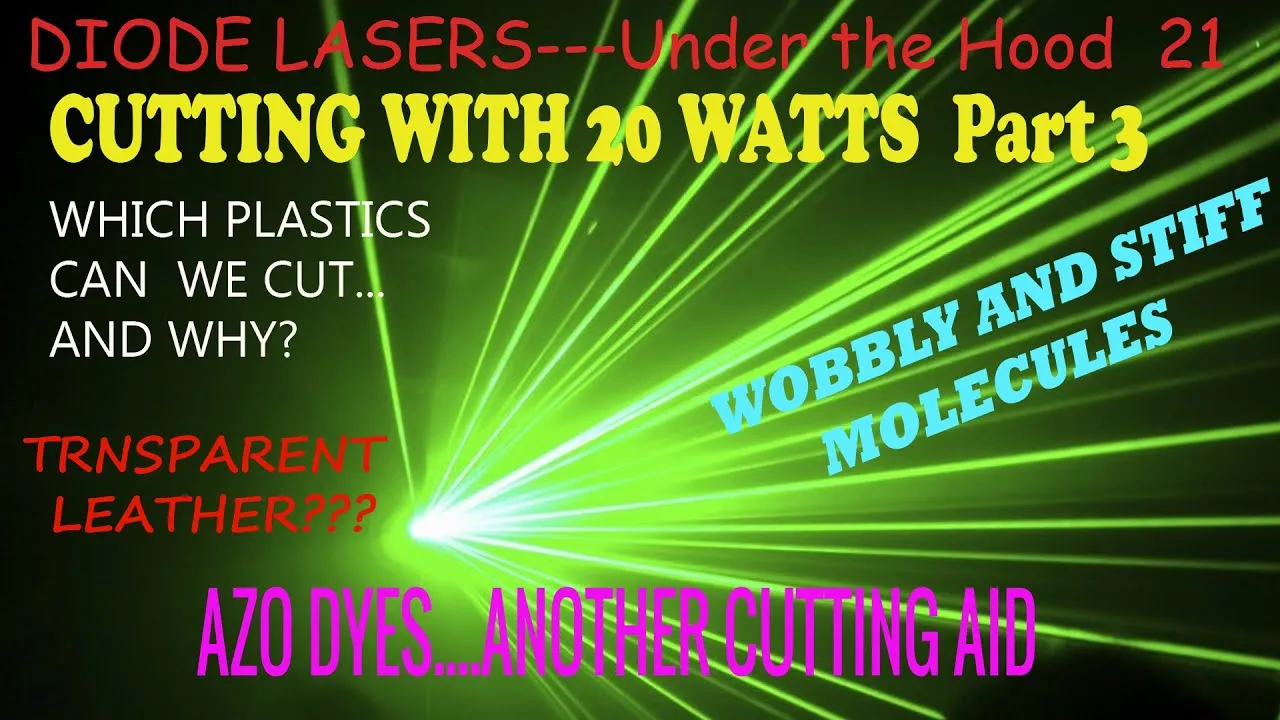
 Russ broadens the tests to a range of plastics, leather and other materials. Instead of compiling a simple yes/no list, he uses wavelength and molecular response to explain why some materials absorb blue light while others barely react.
Previous: Session 20 | Series Menu | Next: Session 22
What You’ll Learn
- Why material colour alone is not enough to predict diode-laser behaviour.
- How molecular structure and additives influence absorption at 455 nm.
- Why some materials need pigments, carbon or other intermediates before damage begins.
The Material Has to Accept the Energy
A diode laser can only produce useful heating where the material or an additive absorbs the blue light. Russ uses this principle to explain why many transparent or lightly coloured polymers are difficult while some apparently unlikely materials can respond.
Practical Tests Still Matter
Formulation, fillers, dyes and manufacturing differences mean theory cannot identify every sample perfectly. The session therefore combines a wavelength-based expectation with controlled material testing.
Why This Session Matters
It gives the series a practical material-selection framework rather than a settings table.
This page is a concise overview of the original video rather than a full transcript.
