 Skip to content
 Cast and extruded acrylic can look almost identical before processing, yet behave differently under a laser. Russ compares the two manufacturing routes and then tests whether the familiar ‘cast engraves white, extruded does not’ rule is as absolute as it is often presented.
Previous: Acrylic Cutting Myths | Series Menu | Next: Multi-Colour Engraving
What You’ll Learn
- How cast and extruded acrylic are manufactured differently.
- Why the two materials can engrave with different surface appearances.
- Why “acrylic” should not be treated as one perfectly uniform laser material.
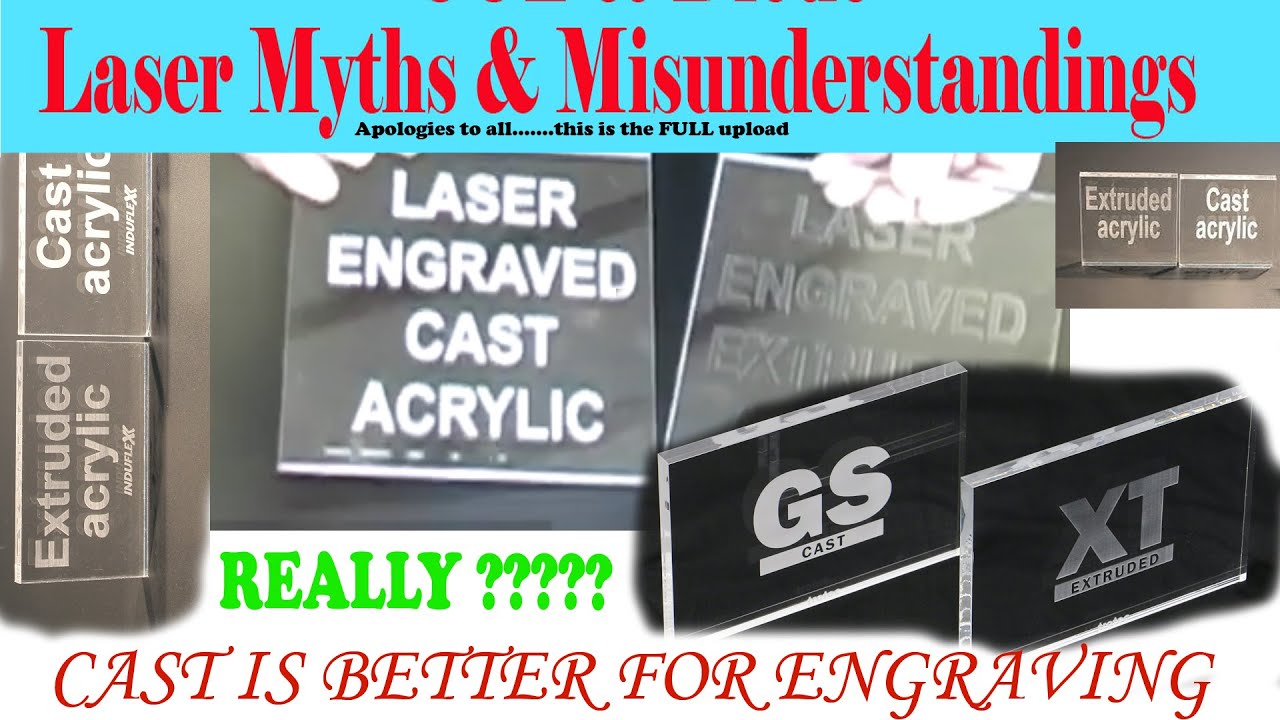
Manufacturing Leaves a Fingerprint
Cast sheet is formed differently from continuously extruded sheet, and Russ links those manufacturing differences to the way the material responds when locally heated by the laser.
Engraving Shows the Difference Clearly
Russ compares the engraved surfaces and argues that the familiar white appearance is strongly influenced by bubbles, surface structure and how light is scattered back to the eye. His tests show that material type matters, but the visual result is not a foolproof identification rule on its own.
Why This Session Matters
It reinforces a recurring theme in the myths series: material name alone is not enough to predict the process. Formulation and manufacturing history matter.
This page is a concise overview of Russ Sadler’s original video rather than a full transcript.
