 Skip to content
 This related video looks at the laser material test matrix from a different angle from a different angle to the Cutting Matrix episode. Russ concentrates on engraving, especially the common use of speed-and-power grids to search for ‘greyscale’ behaviour on diode lasers, and uses CO₂ tests to make the underlying exposure effects easier to see.
Related: Cast vs Extruded Acrylic | Series Menu | Continue: Multi-Colour Engraving
What You’ll Learn
- Why a change in apparent shade can actually be a change in burn depth, carbonisation or surface damage.
- Why speed, power, spot size, focus and line overlap all contribute to the result.
- Why a matrix is a diagnostic tool rather than a universal settings chart.
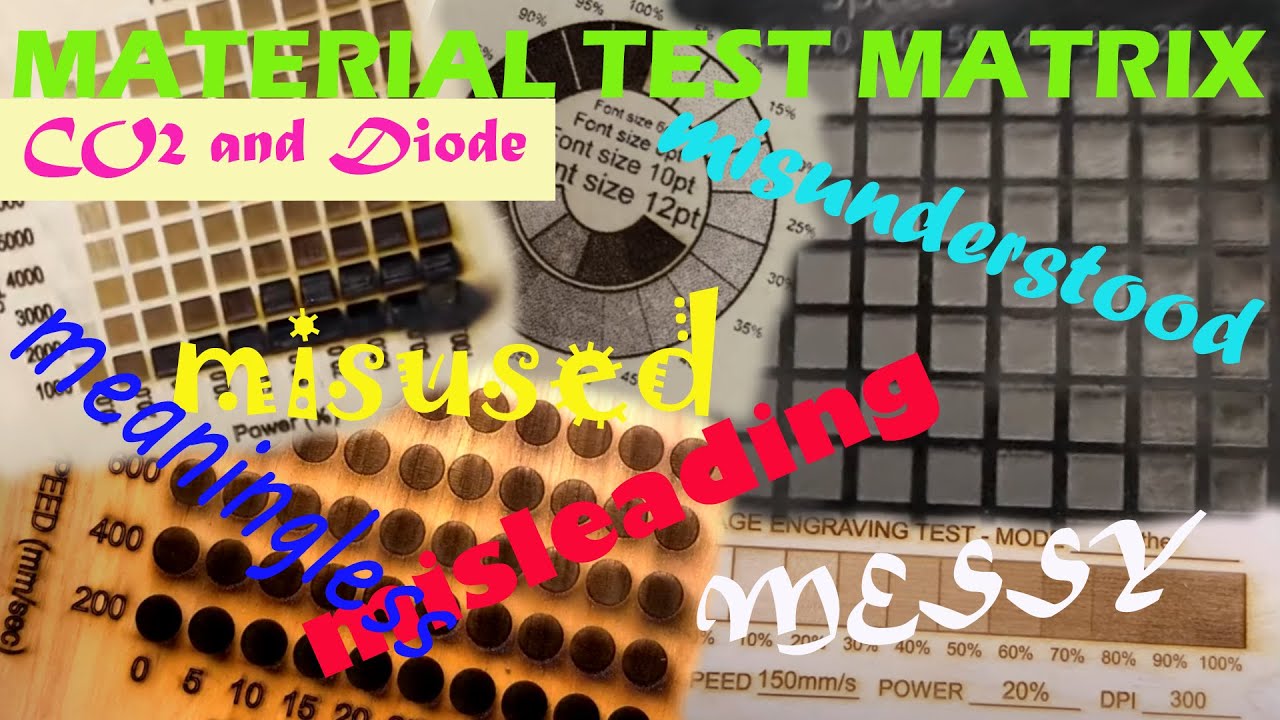
Two Axes, Several Effects
Russ shows that a matrix varies more than two meaningful process quantities in practice. Speed and commanded power alter exposure, while spot shape, focus, line spacing, overlap and the material itself determine whether the result is a light surface mark, carbonisation or measurable depth.
Read the Material, Not Just the Numbers
On wood, Russ measures marks that look like different shades and shows that some of the change is physical depth rather than a controllable continuous grey. That is why he challenges the use of a simple matrix as proof that a diode or CO₂ laser can reproduce greyscale merely by selecting a percentage range.
Why This Session Matters
This is deliberately a related cross-technology resource rather than one of the 16 Myths episodes. Its value is in showing how easily a material-test grid can be misread when visual darkness, depth and exposure are treated as if they were the same thing.
This page is a concise overview of Russ Sadler’s original video rather than a full transcript.
