 Skip to content
 Short answer: there is no single fixed lifespan for a sealed glass CO₂ laser tube. Working life depends on tube quality, operating current, cooling, duty cycle, storage, optical losses and how much output your process actually requires. A good tube can remain useful for years in light or moderate service, while a tube that is overheated or routinely overdriven can lose useful output much sooner.
The important distinction is between warranty period, expected service life and useful life in your application. These are not the same thing. RECI currently states a 12–18 month warranty for its CO₂ tubes and says many are used for around three years in practice. SPT separately advises users to keep working current within the recommended range and avoid operating at maximum current for long periods if they want to extend tube life.
What actually determines CO₂ laser tube life?
Glass CO₂ tubes gradually change as they are used. Output can decline because of changes in the gas mixture, electrode condition and the internal discharge. Catalysts used in some tube designs can help recombine reaction products, but they do not make the tube immune to ageing.
Operating conditions matter as much as the calendar. Excessive current, poor cooling, contamination, repeated overheating and running the laser harder than necessary can all accelerate degradation. Conversely, a correctly cooled tube operated within the manufacturer’s recommended current can remain useful for a long time.
How do you know when a laser tube is actually wearing out?
The most useful test is measured optical output rather than software percentage. A milliammeter tells you how hard a glass tube is being driven electrically; a suitable laser power meter tells you how much optical power the tube is producing.
If tube current is normal but measured optical output has fallen significantly compared with previous readings, the source itself may be ageing. If output at the tube is healthy but cutting performance is poor, check mirrors, lens condition, alignment, focus, air assist and material before condemning the tube.
For the practical steps that help prolong tube life, see How to Extend CO₂ Laser Tube Life. For setting a sensible maximum current and understanding controller percentage, see the Laser Cutter Power Guide.
Current manufacturer guidance
Manufacturer figures should always be checked for the exact tube model because recommended current, maximum current and warranty terms vary. Current reference information is available from RECI’s CO₂ laser FAQ and SPT’s current and power guidance.
Tube quality and supplier traceability matter
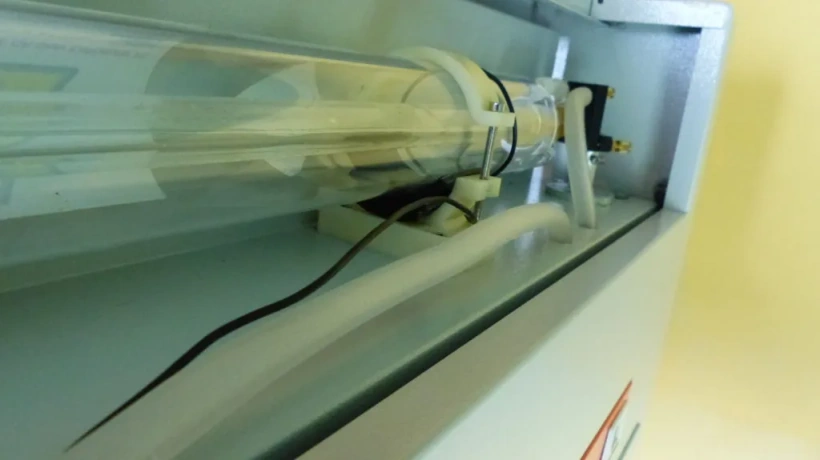
A replacement tube is easier to assess when the manufacturer, model, rated power, recommended current and date of manufacture are clearly identified. Unbranded or incorrectly described tubes make it much harder to know whether poor performance is caused by ageing, incorrect specification or the optical system around the tube.
Rated power is not the same as maximum power
Some tube data sheets publish both a rated output and a higher maximum output. When comparing a replacement tube with the machine specification, use the manufacturer’s rated value and recommended working current rather than assuming the largest number in the listing is a continuous operating rating.
Beam quality also affects useful cutting performance
Two tubes can produce similar measured watts yet perform differently if their beam diameter, mode structure or downstream focus differs. Poor cutting performance should therefore not be diagnosed from wattage alone. Check optical output, beam path, focus and the resulting spot at the workpiece.
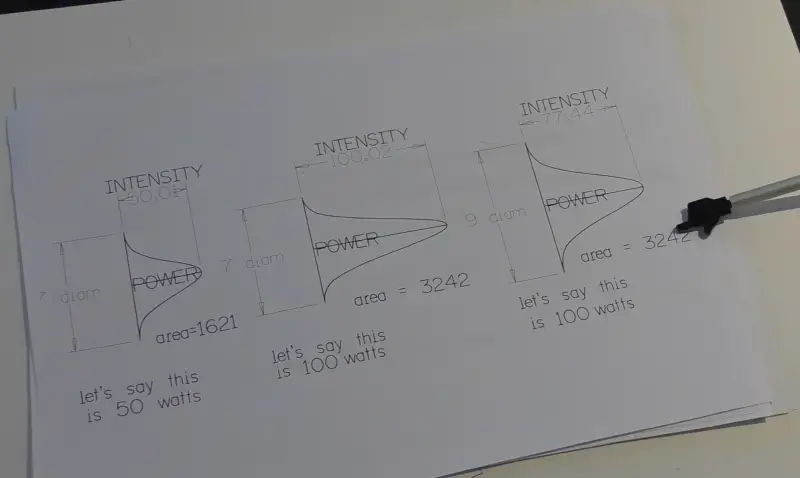
This type of B-grade tube will engrave well, but will have little cutting depth and a tendency to cause scorching around the laser cut.
How you use the Laser Tube can affect it’s Longevity.
Another consideration is how you use the laser tube.
If you are mostly cutting thick materials, you will quickly notice a loss in power as you are running the tube close to it’s recommended maximum current. The only way around this is to slow the cutting speed but it doesn’t take long before this becomes unworkable.
If you are only engraving, then you could lose 50% of the power before it could start to affect your manufacturing.
Overdriving the Tube
Running the tube at too high a % power output can result in overdriving the tube. This is basically the process by which the gases in the laser tube break down, reducing the maximum power output of the tube. Yellowing of the cathode can be an indicator of a tube that has been overdriven.
Check out our post on “How to get a longer Life from your laser tube” for some great tips on getting the best life out of your laser tube. Also check out this post on How to Set Your Maximum Laser Cutting Power % in Vendor Settings so that you can protect your tube from accidental misuse.
What Next?
Did you enjoy this post? Why not check out some of our other posts:
Disclaimer
Last updated April 25, 2024
WEBSITE DISCLAIMER
The information provided by n-Deavor Limited, trading as Laseruser.com (“we,” “us” , or “our”) on (the “Site”) is for general informational purposes only. All information on the Site is provided in good faith, however we make no representation or warranty of any kind, express or implied, regarding the accuracy, adequacy, validity, reliability, availability or completeness of any information on the Site.
UNDER NO CIRCUMSTANCE SHALL WE HAVE ANY LIABILITY TO YOU FOR ANY LOSS OR DAMAGE OF ANY KIND INCURRED AS A RESULT OF THE USE OF THE SITE OR RELIANCE ON ANY INFORMATION PROVIDED ON THE SITE. YOUR USE OF THE SITE AND YOUR RELIANCE ON ANY INFORMATION ON THE SITE IS SOLELY AT YOUR OWN RISK.
EXTERNAL LINKS DISCLAIMER
The Site may contain (or you may be sent through the Site) links to other websites or content belonging to or originating from third parties or links to websites and features in banners or other advertising. Such external links are not investigated, monitored, or checked for accuracy, adequacy, validity, reliability, availability or completeness by us.
WE DO NOT WARRANT, ENDORSE, GUARANTEE, OR ASSUME RESPONSIBILITY FOR THE ACCURACY OR RELIABILITY OF ANY INFORMATION OFFERED BY THIRD-PARTY WEBSITES LINKED THROUGH THE SITE OR ANY WEBSITE OR FEATURE LINKED IN ANY BANNER OR OTHER ADVERTISING.
WE WILL NOT BE A PARTY TO OR IN ANY WAY BE RESPONSIBLE FOR MONITORING ANY TRANSACTION BETWEEN YOU AND THIRD-PARTY PROVIDERS OF PRODUCTS OR SERVICES.
AFFILIATES DISCLAIMER
The Site may contain links to affiliate websites, and we receive an affiliate commission for any purchases made by you on the affiliate website using such links. Our affiliates include the following:
- makeCNC who provide Downloadable Patterns, Software, Hardware and other content for Laser Cutters, CNC Routers, Plasma, WaterJets, CNC Milling Machines, and other Robotic Tools. They also provide Pattern Files in PDF format for Scroll Saw Users. They are known for their Friendly and Efficient Customer Service and have a comprehensive back catalogue as well as continually providing New Patterns and Content.
- Cloudray Laser: a world-leading laser parts and solutions provider, has established a whole series of laser product lines, range from CO2 engraving & cutting machine parts, fiber cutting machine parts and laser marking machine parts.
